

Remasters, be careful but yes please!
As a result of the remastered re-releases of all Arena albums and the subsequent questions and discussions, I have decided to dedicate this column to this choice and the choices for remastering albums in general.


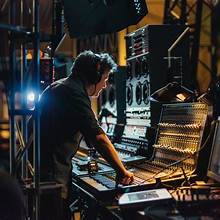
I can't escape a little explanation about mastering music and the way in which it ends up on a physical media carrier. Don't be afraid, I'm certainly not a techie myself and will therefore keep it as understandable as possible.
Once music has been recorded, it is then up to an expert, or at least you hope so, to mix the music and then master it. Ultimately, the quality of these actions, and therefore the person or people who perform them, determines how good the music will ultimately sound. Of course, the quality of the recording is the basis and therefore leading with regard to the possibilities available in the following steps.
The term amplitude is often used to represent the difference between the softest and the loudest parts, in other words the dynamics. In very good recordings, this can even rise to a value between twelve and fifteen (sometimes even higher), but that is rarely the case. The average is often a value around eight/twelve.

A phenomenon that emerged in the nineties in particular were the so-called loudness wars and they have dragged the good name of remasters through the mud. To make the music sound better at first hearing, the volume of the soft pieces was increased to a higher degree, giving the impression that you were hearing more details, and the volume of the louder pieces were decreased. However, this caused the amplitude to drop to sometimes four or five and thus a deterioration in dynamics. You probably know the loudness button on cheap audio equipment or car radios. Because the human ear is initially sensitive to the most audible sounds, this led listeners to believe that these remasters sounded better than the original, but nothing could be further from the truth. There are numerous remasters out there that don’t sound better, and sometimes even much worse, than the originals.
As already stated, I'm not a techie and the above is probably a very simplified view of the technical side of making remasters. For the record, remastering is very different from remixing recordings because the latter changes the way that the individual instruments are put together and therefore results in a substantially different result.
Because there are constant developments in the quality of studio equipment used for mastering recordings, it is not surprising that it is possible to make "old" recordings sound better, or rather, "cleaner". As a listener, you experience this by being able to distinguish the individual instruments better, a more transparent sound image and less "noise". Mind you, while retaining the original amplitude.

As a big fan of Arena, and certainly John Mitchell, the purchase of the remastered albums was a no-brainer because I have every confidence in his qualities as the one who remastered the original recordings in his own Outhouse studio. I am convinced of the fact that he did not tinker with the mix of the original recordings and indeed “just” remastered the albums. I can't prove this with all kinds of measuring equipment because I don't have any. The only thing I can do is compare the original CDs with the remasters and then see what differences I hear. There certainly are audible differences, and especially the older albums benefit from the renewed releases, which seems logical to me. So far, all of them sound great to me, and the ones that are still to come will probably too.

I understand that some people see the release of all kinds of remasters and special editions (how many versions of Pink Floyd's Dark Side of the Moon are there by now?) as a money grab and I have to admit that it can be quite expensive if you want to buy everything. I also understand if people stick to the old and familiar releases. But I, as a forever addicted audiophile, allthough I have to admit, with an ever-decreasing quality of hearing (just like all aging people), go all out for the whole series of remasters of many favourite bands because in almost all cases it really yields gains in terms of sound quality. Especially if they are done by capable people with a good ear and respect for the original recordings. There are plenty of them, also within the prog community. Think of Steven Wilson, for example, but also of Mitchell.


Another reason for buying the remastered albums is the fact that they are repackaged and have a very consistent look, meaning they all have a very similar digipack. Mind you, the artwork is just as on the originals, with a small exception, the lowest banner on the cover of Pepper’s Ghost now says “remastered”.
As a result of this, all albums are (or will be) available again and new fans can buy them. And if you‘ve got them all, decide for yourself if you want to spend the money on a mostly better sounding album, and no, I am not sponsored by any band or webshop!